
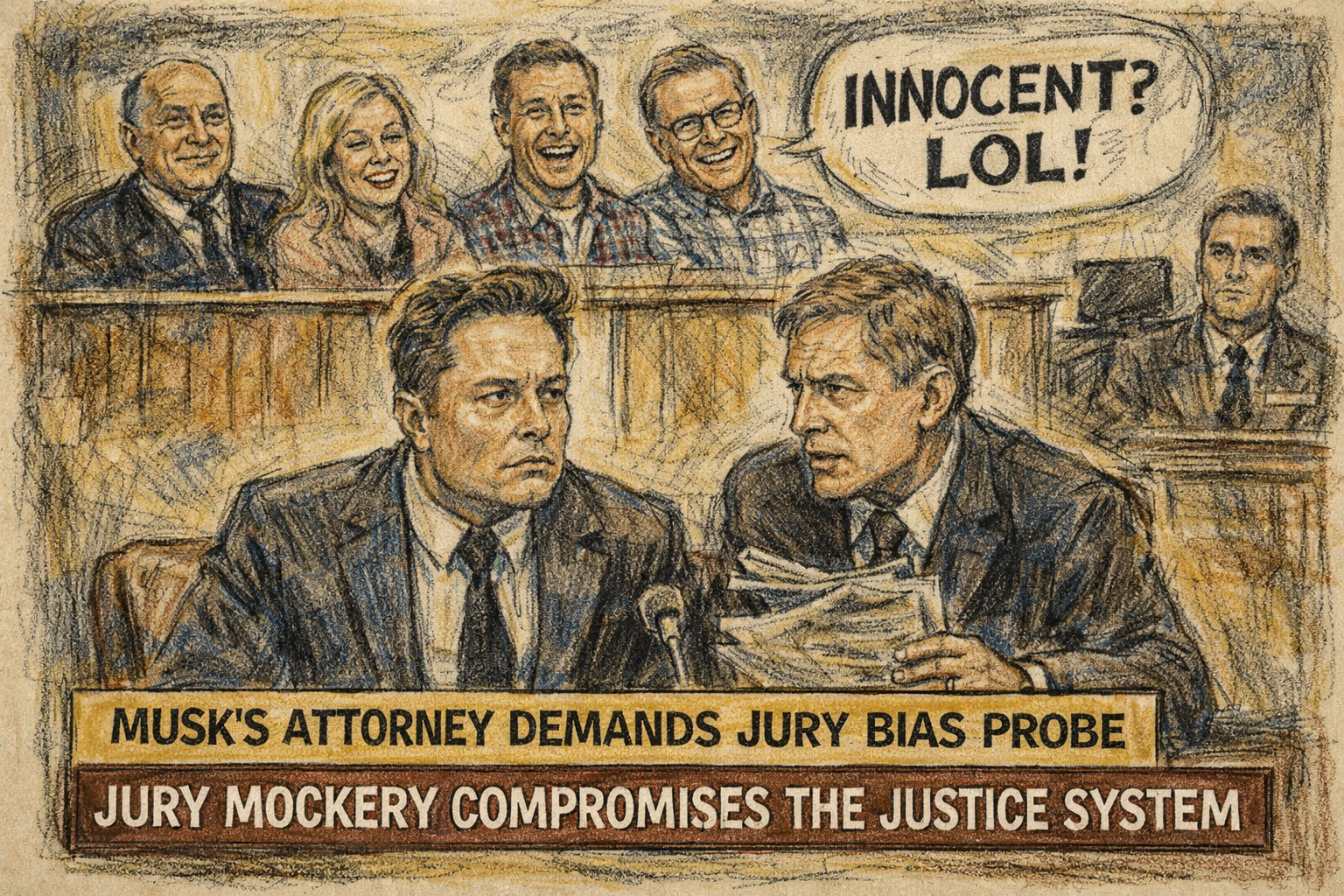
There are bad verdicts, and then there are verdicts that expose something much deeper: contempt for the process itself. The latest controversy surrounding Elon Musk’s legal battle is not just about one case. It is about whether juries are still taking their role seriously or whether some are treating high-profile trials like entertainment.
Musk’s legal team is now demanding an investigation into potential juror bias after reports surfaced that members of the jury mocked the process and dismissed the case in a way that raises serious questions about impartiality. According to his attorney, the verdict was not simply wrong. It was compromised. And if that claim holds water, it should terrify anyone who still believes in the integrity of the American legal system.
This Is Bigger Than Elon Musk
It is easy for critics to roll their eyes and say, “It’s Elon Musk. Of course he’s complaining.” That misses the point entirely. The justice system does not exist to humble powerful people. It exists to deliver fair outcomes based on evidence, testimony, and law.
If a jury is mocking the process, laughing off evidence, or approaching deliberations with a preconceived narrative about the defendant, then the outcome is no longer a verdict. It is a performance.
And if that can happen to someone as visible and resource-equipped as Musk, what chance does an ordinary citizen have?
Bias In The Jury Box Is Not A Minor Issue
Jury bias is not some technicality cooked up by expensive lawyers. It is one of the core threats to due process. The entire system depends on the idea that twelve individuals can set aside personal feelings, political opinions, and media narratives to weigh facts objectively.
When that breaks down, everything breaks down.
- Pre-existing hostility toward a public figure can shape how evidence is interpreted.
- Social pressure inside the jury room can push dissenting jurors to conform.
- Mockery of the process signals that deliberation itself is not being taken seriously.
If Musk’s attorney is correct that jurors treated the case like a joke, then the verdict is not just questionable. It is fundamentally unreliable.
The “Public Figure Discount” Is Real
There is an uncomfortable truth that many in media and legal circles do not want to admit: high-profile defendants often face a different kind of jury environment. They walk into courtrooms carrying years of headlines, social media narratives, and public opinion that jurors are expected to magically ignore.
That expectation is increasingly unrealistic.
Elon Musk is not just a businessman. He is a lightning rod. He is loved, hated, memed, politicized, and constantly in the public eye. Pretending that jurors can simply switch all of that off at will is naïve at best and dishonest at worst.
That is why allegations of mockery matter so much. They suggest that instead of fighting to remain impartial, some jurors may have leaned into those preconceived narratives.
This Is How Trust In The System Collapses
The American legal system relies on legitimacy. People accept verdicts, even painful ones, because they believe the process was fair. The moment that belief erodes, compliance becomes fragile.
If juries are perceived as biased, unserious, or driven by outside narratives, then every controversial verdict becomes suspect. Every losing party believes the game was rigged. Every future jury is viewed through a lens of skepticism.
That is not a partisan issue. That is a systemic one.
An Investigation Is The Bare Minimum
Musk’s legal team is right to demand a probe. Not because he is Elon Musk, but because the allegations strike at the heart of due process.
An investigation should answer basic questions:
- Did jurors express bias before or during deliberations?
- Were outside narratives or personal opinions openly influencing the decision?
- Was the process treated with the seriousness required under the law?
If the answer to any of those questions is yes, then the court cannot simply shrug and move on. The integrity of the verdict itself is in question.
Conclusion
This case is a warning shot. Not about Elon Musk, but about the fragile state of jury credibility in an era of constant media saturation and political polarization.
If jurors are mocking proceedings, if bias is bleeding into deliberations, and if verdicts are shaped by narrative instead of evidence, then the system is not just flawed. It is drifting toward failure.
Musk’s attorney is not asking for special treatment. He is asking for the baseline standard the system promises every defendant: a fair trial decided by serious people, not spectators looking for a punchline.
If we cannot guarantee that anymore, then the problem is far bigger than one verdict. It is the beginning of a justice system that people no longer trust.
Leave a Reply