
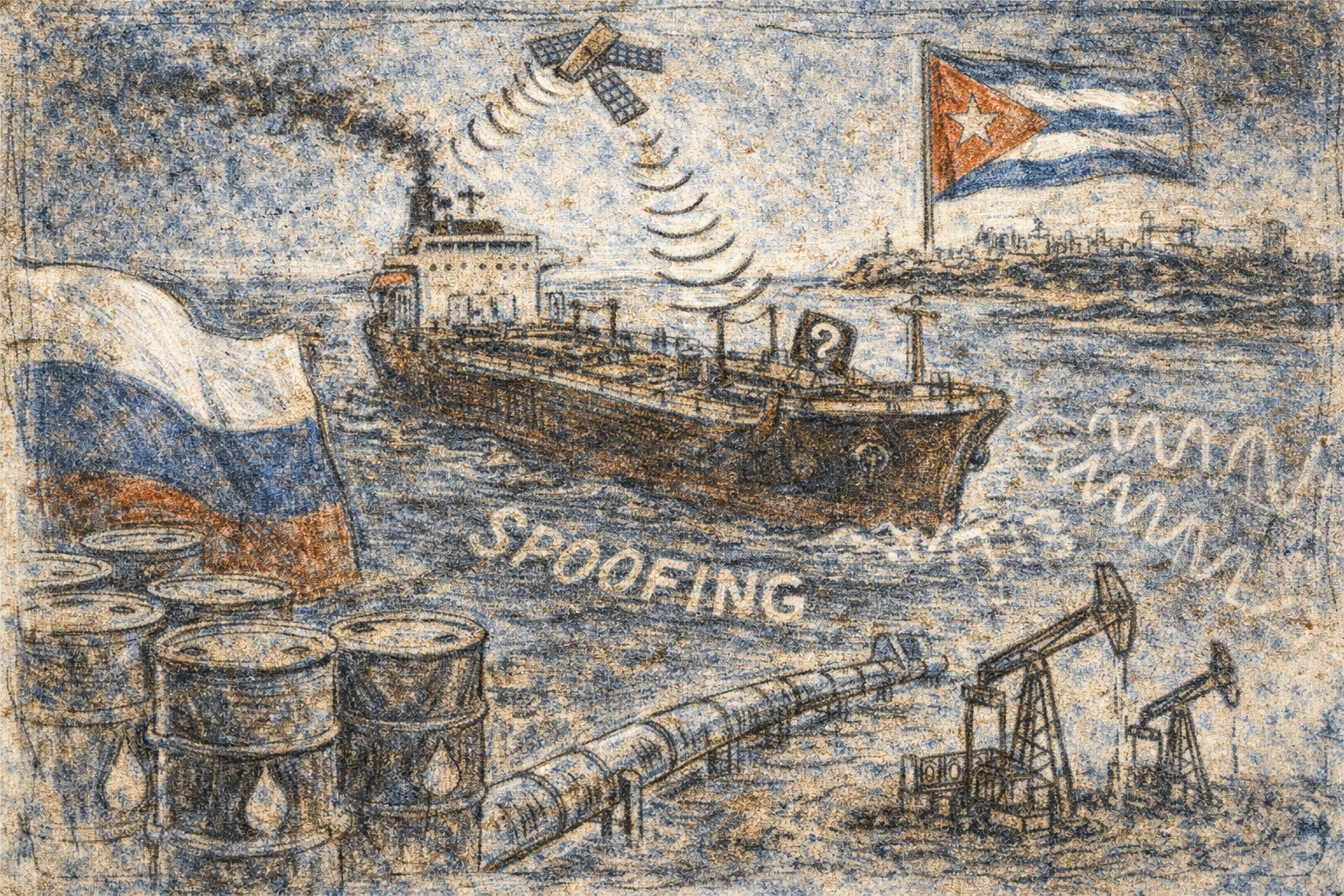
Reports that Russia is shipping fuel to Cuba through maritime deception should be treated as more than a sanctions story. They are a warning. When hostile or adversarial governments can exploit shortages, hide cargo movements, and keep anti-American regimes afloat, the United States should not answer with passivity. It should answer with strength. That means tighter enforcement against sanctions evasion, tougher pressure on Havana and Moscow, and a serious commitment to unleashing American energy production instead of tying it down with state-level restrictions and anti-drilling politics.
The most recent warning sign came from maritime intelligence firm Windward, which reported that the Hong Kong-flagged tanker Sea Horse, carrying Russian gasoil, appeared to spoof its location, suspend normal AIS behavior, and likely discharge about 190,000 barrels of fuel in Cuba in early March. Windward said the vessel broadcast that it was “not under command” and effectively drifting in the Sargasso Sea for weeks, even as its movement patterns suggested deceptive routing tied to a Cuba delivery. Fox News separately reported on the same alleged shipment and said the tactic challenged President Trump’s tightening pressure on Cuba’s fuel lifelines. See Fox’s report here.
The Russia-Cuba Fuel Link Is Not Theoretical
This did not emerge in a vacuum. Reuters reported in February that the Kremlin said Cuba’s fuel situation was “critical” and pledged support as the Trump administration moved to choke off oil supplies reaching the island. Reuters also reported that Moscow was discussing ways to help Cuba as Washington threatened suppliers and tightened economic pressure. See Reuters’ February report. Reuters later reported that Cuba opened talks with the United States as the oil blockade took a severe toll on the island’s economy and public services. See Reuters’ March report.
In other words, the pressure campaign was working. Cuba was hurting. Fuel shortages were severe. Services were strained. And that is exactly why Russian fuel deliveries matter. They are not just cargo transfers. They are geopolitical relief valves for a communist regime that Washington is trying to isolate.
Spoofing And Dark Fleet Tactics Are The Telltale Sign
The use of spoofing, false destination signals, and other deceptive vessel behavior matters because it shows intent to evade scrutiny. Windward’s reporting says the Sea Horse switched off or manipulated tracking behavior and likely used deceptive maritime practices tied to sanctions circumvention. See Windward’s analysis. That fits a wider pattern. Reuters reported in 2024 that tankers visiting Russian ports were already spoofing locations and disabling tracking systems to conceal sanctions-sensitive shipping activity in Europe. See Reuters’ report on spoofing and AIS manipulation.
Once that pattern reaches the Caribbean and starts serving Havana, the United States should stop pretending this is just clever shipping. It is sanctions evasion in service of a hostile state relationship. The answer cannot be to shrug and say the market will sort it out. The answer has to be stronger energy leverage and stronger enforcement leverage.
America Should Make It Harder For Cuba To Find Workarounds
If Russia can keep Cuba on life support through covert fuel shipments, Washington’s pressure campaign becomes harder to sustain. The practical response is not only maritime enforcement. It is also to make the United States stronger and less constrained on the energy side. A country that wants to use energy as an instrument of foreign policy cannot act like its own domestic production is a moral embarrassment.
That is where the American oil industry matters. The stronger domestic production is, the less vulnerable the United States and its allies are to supply disruptions, price spikes, and manipulation by hostile suppliers. Reuters reported in January that the Trump administration took the first formal step toward offering new offshore oil drilling leases in Southern and Central California as part of a broader energy-dominance agenda. Reuters said the Interior Department framed the move as part of a push for a stronger and more secure American energy future. See Reuters’ January report.
California’s Restrictions Show The Wrong Approach
California is one of the clearest examples of self-imposed scarcity. Reuters reported in January that California’s Senate Bill 1137 bans new oil and gas wells within 3,200 feet of community spaces and imposes additional requirements on existing wells. The U.S. Justice Department argued the law would knock out about one-third of all federally authorized oil and gas leases in California. See Reuters’ coverage of the legal challenge.
Reuters also reported in March that the Trump administration directed Sable Offshore to restore oil drilling operations off the Southern California coast and said the move was intended to address supply disruption risks caused by California policies that had left the region and U.S. military forces dependent on foreign oil. Reuters said the facility could produce roughly 50,000 barrels of oil per day. See Reuters’ March report on the Sable restart order.
That should be the headline lesson. When domestic production is throttled by state policy, the vacuum does not stay empty. It gets filled by foreign supply, foreign leverage, and foreign risk. If American officials are serious about challenging Russian support for Cuba, they should stop tolerating policies at home that make America weaker, tighter, and more dependent.
Energy Strength Is National Security Strength
This is bigger than California. The broader principle is that energy abundance gives the United States strategic room to maneuver. Energy scarcity narrows it. A country with robust drilling, refining, and transport capacity has more power to keep prices stable, back allies, punish adversaries, and withstand geopolitical shocks. A country that restricts itself while rivals cheat and reroute cargoes is volunteering for weakness.
That is why the Cuba story matters. Russia is not trying to help Havana out of charity. It is trying to preserve an allied regime in America’s hemisphere while undercutting U.S. pressure. Covert fuel shipments and spoofed vessel tracks are a reminder that hostile states exploit every opening they can find. America should be closing openings, not creating more of them through domestic energy sabotage.
What Washington Should Do Next
- Increase sanctions enforcement against deceptive shipping. The United States should aggressively track, expose, and penalize vessels and intermediaries that use spoofing and ship-to-ship transfers to support sanctioned or embargoed fuel flows.
- Expand domestic energy production. The administration should continue opening federal leasing, supporting offshore production, and accelerating projects that strengthen supply.
- Challenge state restrictions that cripple output. Laws and regulatory schemes that block drilling, pipelines, or production capacity in energy-rich states should face federal scrutiny when they undermine national supply resilience.
- Link energy policy to hemispheric strategy. If Cuba is being propped up through illicit or deceptive fuel routes, America should answer with both enforcement and abundance.
Conclusion
Reports that Russia shipped fuel to Cuba using spoofing tactics are not just a story about one tanker. They are a snapshot of a larger contest. Moscow is trying to keep Havana alive. Washington is trying to pressure the regime. And every barrel that reaches Cuba through deception weakens the force of that pressure.
One of the smartest ways to answer that challenge is not to make America smaller, tighter, and more dependent. It is to make America stronger, more productive, and harder to outmaneuver. Open up the American oil industry to its full potential. Strike down state policies that choke drilling and production in places like California. Treat energy abundance as the strategic advantage it is. If Russia wants to prop up Cuba through shadowy shipments, the United States should answer with sanctions enforcement backed by real American energy strength.
Leave a Reply